Home
http://www.virbac.fr/ http://www.boehringer-ingelheim.com/ http://www.novartis.com/ http://www.animalhealth.bayerhealthcare.com/
vetcontact
Vetrinär
Tiermedizin
  WELCOME  
vetcontact
Vetrinär
Tiermedizin
  Home  
  Login / Newsletter  
vetcontact
Vetrinär
Tiermedizin
  CONTACTS  
vetcontact
Vetrinär
Tiermedizin
  Classifieds  
  New Products  
  VetCompanies  
  VetSchools  
vetcontact
Vetrinär
Tiermedizin
  PROFESSION  
vetcontact
Vetrinär
Tiermedizin
  Edutainment  
  VetAgenda  
  Presentations  
  Posters  
  ESAVS  
  Specialisation  
vetcontact
Vetrinär
Tiermedizin
  INSIGHT  
vetcontact
Vetrinär
Tiermedizin
  Congress News  
  Picture Galleries  
  Interferon  
vetcontact
Vetrinär
Tiermedizin
  PRODUCTS  
vetcontact
Vetrinär
Tiermedizin
  Bayer  
  Boehringer Ing.  
  Novartis  
  Virbac

 
  Simply book for less...  
    

deutsch english español polski francais

start search
Home / WELCOME / Archiv / Small Animal Practice /  
 
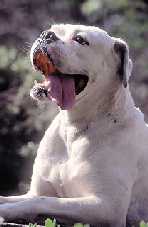
NEW HYPOTHESIS CONCERNING PATHOGENESIS OF CANINE PANOSTEITIS
Bayer 2218.jpg © Bayer Animal Health
Panosteitis is an idiopathic bone disease of young dogs, mostly affecting large or giant breeds. Investigators of the University of Bern, Switzerland, developed a plausible, empirically based hypothesis governing its pathogenesis.

Extensive clinical observations suggest a close relationship between the incidence of this disease and the commercialization of various protein-rich, high-caloric dog foods. The theory of an ``osseous compartment syndrome`` provides a hypothetical pathogenesis, which corroborates this finding.

An excessive accumulation of protein causes intraosseous edema due to its osmotic effects. Because bone is a rigid compartment, this leads to an increase in intramedullary pressure and compression of blood vessels. Subsequent osseous ischemia leads to a deficient metabolic state (decreased oxygenation, inadequate influx of nutritive substances, local acidosis, decreased removal of metabolites, disruption of local biochemical processes, etc.), and a vicious circle is created due to the resulting local inflammation.The disease is aggravated by increased metabolism due to excessive physical activity.

Within the context of a pilot study, clinical, radiographic, scintigraphic and thermographic examinations and a therapeutic trial with benzopyron were carried out. In addition, more modern investigative tools, including osteomyelography, magnetic resonance tomography and intraosseous pressure measurements were used to provide objective data concerning the pathogenesis of panosteitis.

In most cases, clinical remission was seen within days of monotherapy with the proteolytic substance, benzopyron (Cumartrin(R)). This finding appears to corroborate our hypothesis.

Source: P Schawalder, HU Andres, K Jutzi, C Stoupis, C Bosch (2002): Canine panosteitis: an idiopathic bone disease investigated in the light of a new hypothesis concerning pathogenesis. Part 1: Clinical diagnostic aspects. In: Schweizer Archiv Fur Tierheilkunde, 2002, Vol 144, Iss 3, pp 115-130


Tell a friend   |   Print version   |   Send this article

SMALL ANIMAL PRACTICE

Ceramides in normal dogs versus dogs with atopic dermatitismembers
As in humans, there is mounting evidence in support of an abnormal skin barrier contributing to the pathogenesis of canine atopic dermatitis (AD). Studies in people with AD have associated an abnormal skin barrier with deficiencies in ceramides, which represent important components of the stratum corneum (SC) intercellular lipid lamellae. Is this also true for dogs?

  • Serotonin in degenerative mitral valve diseases of the dogmembers
  • Patella alta and patella baja in large-breed dogsmembers
  • Encephalitozoon cuniculi Infections in Dogsmembers
  • Thermal inactivation of Toxoplasma gondii oocysts in watermembers
  • Presumptive metronidazole toxicosis in a catmembers
  • New surgical technique for colorectal adenocarcinomasmembers
  • Diltiazem in dogs with leptospirosis and acute renal failuremembers
  • Radiotherapy for canine chronic superficial keratitis
  • Adjunctive splenectomy in dogs with immune-mediated hemolytic anemiamembers
  • Pericardial effusion due to left atrial rupture in dogsmembers
  • Conjunctival changes associated with canine distemper virus-induced KCSmembers
  • Longitudinal bone transport in canine primary bone tumorsmembers


  • [ Home ] [ About ] [ Contact / Request ][ Disclaimer ]

    Copyright © 2001-2005 VetContact GmbH
    All rights reserved